
"What else can I do with my BCBA®?" is the wrong place to start.
Behavior analysis and the insurance-funded two-tier model are two different things. Once you separate them, the question changes from what job you could apply for to what problems you're positioned to solve.
Start the courseFor BCBA®s who want to keep doing behavioral work, and are less sure about the structure that's been built around it.
The conversation in every BCBA® group eventually lands in the same place
- — Productivity expectations that have very little to do with clinical quality.
- — RBT® turnover and staffing gaps you're absorbing whether or not that's your job.
- — Treatment decisions shaped by what a payer will authorize.
- — Audits, reimbursement changes, tighter authorizations, and more scrutiny of high-intensity ABA.
- — More time spent managing systems than doing the clinical work you actually like.
- — An income that depends entirely on one funding system continuing to work the way it does now.
What this course is — and isn't
This course is
- A way to separate the science from the service model, and see which pieces of your work you'd actually keep
- A close look at focused behavioral consultation as one alternative to the two-tier model
- Three worked business examples — private-pay parent consultation, a homeschool academic niche, and consulting to organizations
- The capacity and pricing math that decides whether a model is sustainable for you
- A workbook that walks you through building and stress-testing your own model
Worth knowing before you start
- You won't find a list of side hustles here. We look closely at one service model and how to evaluate it.
- Your certification alone doesn't qualify you to work on anything behavior-adjacent. Competence still sets your scope, and we treat that seriously throughout.
- You'll learn how to evaluate and structure the model. Delivering consultation session by session is its own training, and this course stays focused on the decision that comes first.
Three decisions we usually make as one
Most BCBA®s serve autistic children, provide intensive ABA through a two-tier model, and get paid by insurance. Those are three separate choices, and changing one changes the work.
Population — who you serve. Same service, different families, and the work looks different.
Service — what you actually provide, and at what level of professional involvement.
Payer — who pays. A school, an organization, or a family directly, instead of a third party.
Comprehensive ABA is one option on a continuum
Start with the need, define the scope, then choose the service. The course walks through five levels of involvement and where each one fits.
- Education Teaching information that's useful across people and situations, without taking on an individual case.
- Focused behavioral consultation Behavioral problem-solving brought to one specific situation, for a limited period.
- Caregiver-mediated intervention An ongoing clinical role where the caregiver is the primary intervention agent.
- Focused direct service Direct work on a small number of clearly defined goals, with the scope kept deliberately narrow.
- Comprehensive intervention Appropriate for some clients — and no longer the default everything else is built around.
What you'll be able to decide by the end
Which parts of your current work you want more of, and which parts were never behavior analysis to begin with.
Whether an opportunity fits on all four counts: need, competence, context, and the career you're trying to build.
What actually stands between you and being ready — and whether that gap takes a week or a year to close.
How many clients your available hours can really support, once prep, documentation, and follow-up come out of the same pool.
What a service earns per hour of professional time, rather than per appointment.
Which single assumption would sink your model if it's wrong — so you can test that one first.
Why I made this one different
Most of what I teach is clinical. This one started from the conversations I keep seeing in BCBA® groups — people who are burned out, tired of the structure around the work, and asking what else they can do with their certification.
I think that question starts in the wrong place. Behavior analysis isn't synonymous with working in an autism clinic, and being a BCBA® doesn't have to mean supervising a team of RBT®s while you bill insurance. That's one service model. It's an important one, and it has given thousands of families access to care they couldn't afford privately. It also became so dominant that we started treating it as the profession itself.
So this one is less about a clinical technique and more about how you decide to use what you already know.
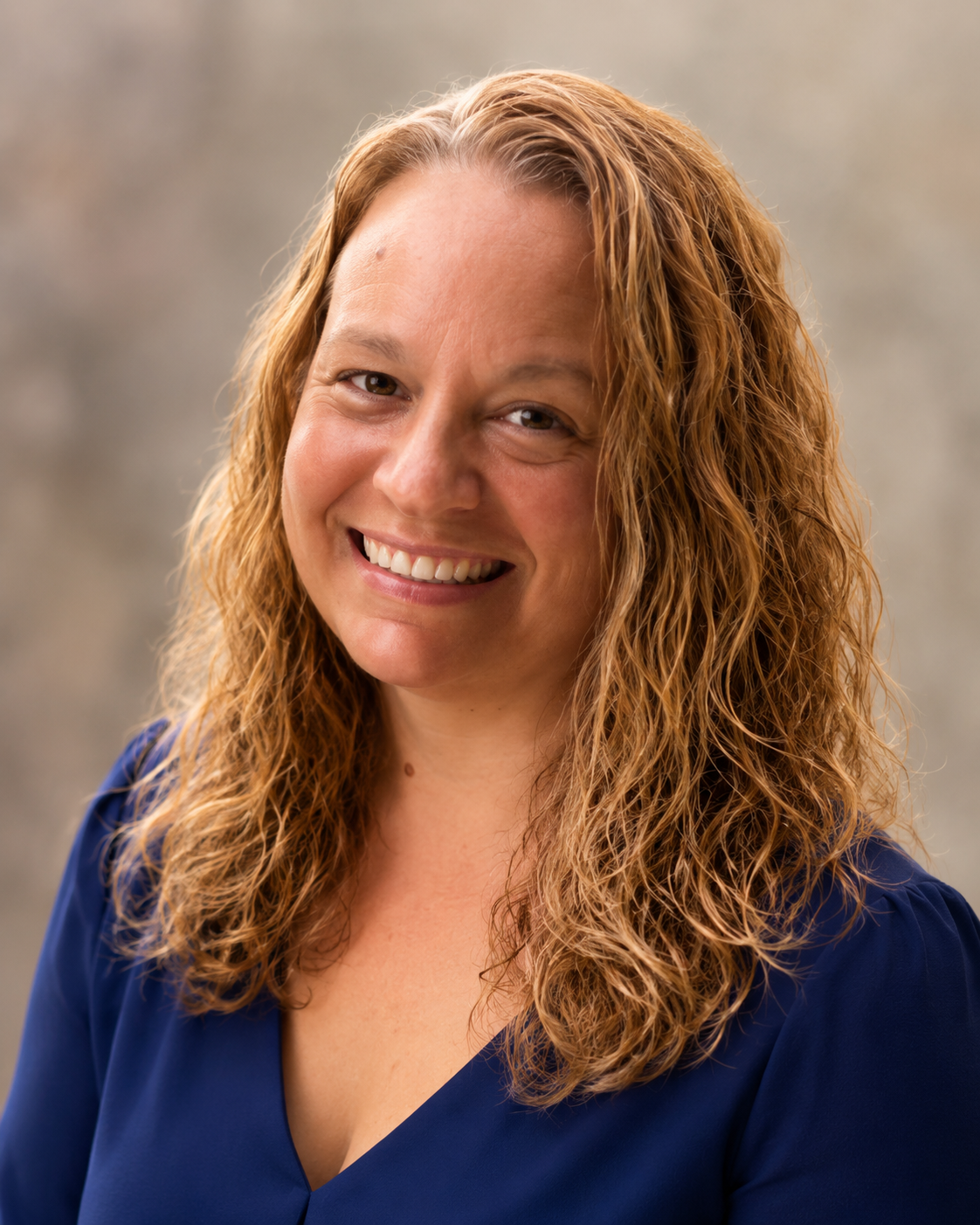
Amelia Dalphonse, MA, BCBA, is co-founder of Master ABA. Her work focuses on helping BCBA®s practice in ways that are ethical, compassionate, and sustainable — for the people we serve and the clinicians doing the work.
Where it starts: a fictional BCBA® named Maya, eight years in, good at her job, and tired of everything built around it.
What it works through: an opportunity Maya wasn't looking for, and every decision she has to make before it becomes a service — including the point where the right answer is to go get more information.
What it leaves you with: your own model, run through the same questions, with the weakest assumption identified.
What's included
Everything you need to build and pressure-test your own model.
Roughly 100 minutes, structured around a case study and three worked business examples, with exercises built in.
Certificate released when you pass the quiz — save your BCBA® number to your account first.
The exercises Amelia pauses for in the video — your keep-and-change lists, the population/service/payer swap, the problem you'd solve, the capacity and pricing math, the infrastructure checklist, and your riskiest assumption.
Short, and the thing that actually releases your certificate.
What BCBA®s say about Amelia's courses
This course is new — these reviews are from her other courses, each labeled with which one.
"This was one of the best CEU courses I've taken as a BCBA in 10+ years."
"This is an exceptionally helpful course laid out in clear instructions with real-world examples. Highly recommend!"
"Relevant, well explained, great resources."
Focused Behavioral Consultation
About the cost of an hour of your time, to decide how you want to spend the next several years of it.
Who this is built for
This is for you if
- You've caught yourself wondering how long you want to keep practicing the way you're practicing
- You want to add focused consultation to a role you already have
- You're considering a small side practice — two or three private-pay families at a time
- You own an ABA company and are uncomfortable with how much of it rests on RBT®-delivered hours
Come in knowing
- The course is about evaluating and structuring a model, with delivering consultation left for another training
- You'll get more out of it with the workbook filled in than watching passively
Questions before you start
Is this course clinical or business-focused?
Both, deliberately. It covers the clinical foundation of consultation as a service model and the practical side — capacity, pricing, infrastructure — because a model that's clinically sound and financially unsustainable won't survive contact with your actual week.
Does this teach me how to run behavioral consultation?
It gives you the clinical foundation and the structure of the service, and it's explicit that a full how-to on delivering consultation is a separate training. This course is about deciding whether the model fits and building one that works.
Do I need to want to leave my job?
No. The course treats a new service and a new business as separate decisions. Consultation might live inside the role you already have, become a small side practice, or turn into another service line at a company you own.
How do I get my certificate?
Watch the course through to the end and pass the quiz. Make sure your BCBA® number is in your account before you take it so the certificate populates correctly.
The version of ABA you've experienced isn't the only way to use what you know.
For BCBA®s who want to keep the clinical work and rethink the structure around it.
Start the course — $30